博文

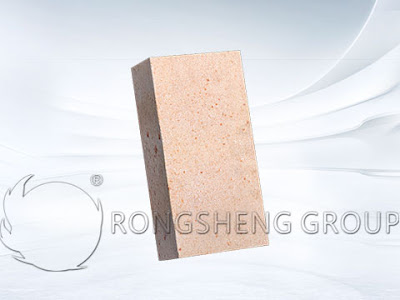
What is the Production Process of Zircon Mullite Bricks?
图片
Zirconia mullite brick is a refractory product made of mullite and zirconia. Zircon mullite fused cast brick has dense crystal structure, high softening temperature, good thermal stability, high mechanical strength, good wear resistance, good thermal conductivity and good corrosion resistance. Zircon brick series products are based on α-Al2O3, with partially stabilized zirconia and zirconia corundum clinker as raw materials. After mixing, molding, drying, and high-temperature firing in a shuttle kiln. Zirconium bricks have compact structure, high volume density and large capacity. High mechanical strength, good thermal shock stability, reheating shrinkage, low high temperature creep, high chemical stability, corrosion resistance to alkali medium. Rongsheng Zircon Mullite Brick Introduction to the Production Process of Zirconium Mullite Brick By introducing ZrO2 into A12O3-SiO2 series bricks, the structure of mullite can be improved. It can improve the chemical resistance of mullite, a...

Welcome to Rongsheng Monolithic Refractory Plant

图片

Lightweight Insulating Castables by Temperature

图片
Insulation refractory castable is also called lightweight refractory castable, also known as boiler insulation castable. Thermal insulation refractory castable thermal insulation castable is based on light thermal insulation aggregate. Add refractory powder, together with binding material and admixture, according to the optimal proportion, it is a kind of hydraulic unshaped thermal insulation material made by dry mixing. It has the characteristics of low bulk density, low thermal conductivity, and high thermal insulation performance, and can be constructed and poured on site. Also known as lightweight insulating castables . It is widely used in boilers, industrial kilns, and other equipment body thermal insulation engineering fields, mainly used for thermal insulation of kilns and to prevent the loss of heat sources. lightweight insulating castables Lightweight Insulating Castables by Temperature Lightweight castable is made of aluminate cement, high alumina fine material, ceramsite, a...

Application of Zirconium Silicate in Traditional Ceramic Industry

图片
The application ratio of zirconium silicate in the traditional ceramic industry. Daily ceramics and sanitary ware are mainly used for the high-temperature opaque glaze, and their content is 8-12% and 8-14% respectively. Glazed interior wall tiles are used for cosmetic soil and zirconium white frit, the content of which is 4-10% and 10-12% respectively. The early porcelain polished tiles were used for ultra-white tiles, and their content was 3-5%; more than 3-5%, the internal irradiation and external irradiation increased significantly. Therefore, many companies reduce the amount of zirconium silicate in polished tiles, generally adding 1-2%, and glazed products will also add 1% zirconium silicate or zircon powder to increase stability. But none of this is the main application. Application of zirconium silicate in the traditional ceramic industry. The application of zirconium silicate in pigment-related fields is above 50%. Zirconium silicate is a non-toxic, odorless white or off-white ...

Manufacture the Refractory Brick MGO - Magnesite Brick

图片
Magnesia brick definition. Magnesite brick inquiry is an alkaline refractory material with a magnesium oxide content of more than 85% and periclase as the main crystal phase. Magnesia brick is a refractory brick made of fused magnesia and sintered magnesia at high temperatures.  Manufacture the Refractory Brick MGO QUOTATION. The raw materials for the production of magnesia bricks mainly rely on magnesite. The production process of magnesia brick is to mix dead-burned magnesia with a particle size of less than 5 mm to a fine powder and mix an appropriate amount of sulfite pulp waste liquid or caustic magnesia as a binder. Compression molding under a press. The composition of magnesia brick is metallurgical magnesia, sulfite pulp waste liquid, and caustic magnesia. Metallurgical magnesia is MgO decomposed from magnesite above 1600℃. Its components are, MgO: 92-93.5%, Fe2O3: 1.5-3%, AL2O3: 0.5-3%, CaO: 1-2.5%, SiO2: 2-2.5%.  Manufacture the Refractory Brick MGO Magnesia bricks ...

Why Can the Use of Magnesia Spinel Bricks Prevent Ring Formation in the Rotary Kiln?

图片
For the firing zone of the cement rotary kiln, a stable and strong kiln skin is required. Because it can protect the refractory lining and reduce the heat loss through the kiln body. A few centimeters of stable kiln skin can not only extend the life of the lining material by nearly 100% but also reduce the temperature of the kiln body by several hundred degrees. This means reducing heat loss by up to 25%. When the local kiln appeared thick skin, it is known as "ring formation." It will hinder the operation of the kiln considerably. The most serious is that it has built an unfixed cross-section of the kiln, which hinders the steady flow of materials and fuel gas into the kiln. Once the kiln skin is looped, it cannot fall off by itself, and the kiln has to be stopped in order to deal with them. Rotary Kiln in the Cement Plant The rate of kiln shutdown due to loop formation accounted for 80%. The change cycle ranges from once a month to more than once a week. It is for this reas...

The Use of Graphite Electrodes on Industrial Silicon Furnaces

图片
The industrial silicon reduction electric furnace is a resistant electric arc furnace. The graphite electrode  is inserted into the furnace charge for submerged arc smelting, continuous heating, intermittent silicon production, continuous operation, also called submerged arc furnace. Graphite Electrodes on Industrial Silicon Furnaces Uses of Industrial Silicon Industrial silicon is also called crystalline silicon or metallic silicon. The main use of industrial silicon is as an additive for non-ferrous alloys. When silicon is added to some non-ferrous metals, it can significantly improve the strength and hardness of the metal. It can also improve the casting performance and welding performance of the substrate. Industrial silicon is also used as an alloying agent for silicon steel with strict requirements, deoxidizer for smelting steel, silicone resin, silicone rubber, etc. After a series of process treatments, industrial silicon can be made into monocrystalline silicon and polycry...